The 5pm Panic and the Job Nobody Trained You For
Pantry Persona
TL;DR
- "What's for dinner?" dread is decision fatigue hitting at the worst possible moment, not a personal failing.
- By 5pm, your brain has been making decisions all day. Food choices are some of the last to get made, and they get what's left.
- The household meal planner carries everyone's preferences, schedules, and constraints in their head. No training. No title.
- An AI with persistent kitchen context turns "what should I make?" from a blank-page crisis into an actual conversation.
It's 5:17pm on a Wednesday. You're standing in front of the open fridge, staring at chicken thighs, half a pepper, some leftover rice, and a bag of spinach that's one day away from becoming compost. Your brain registers all of it and produces exactly zero meal ideas.
From the other room: "What's for dinner?"
Or it's just you, alone with the fridge, and the question is coming from inside your own head.
You don't know. You genuinely don't know. Dinner was in there somewhere today, behind the other 200 things you thought about first.
The question that weighs more than it should
Think about how many food-related decisions you make on any given day. "What's for dinner" is the obvious one. But there's also "do we need more milk," "will the kids eat this," "is that chicken still good," and "should I defrost something tonight for tomorrow." Most of these happen in the background, uncounted.
By 5pm, your brain has been making decisions since you opened your eyes. What to wear. How to respond to that email. Which meeting to prioritize. Whether to say something or let it go. Psychologists call it decision fatigue: the quality of your choices degrades the more of them you make. It's a capacity problem.
And by late afternoon, the tank is empty. "What's for dinner" lands on a brain that has nothing left to give.
That's the 5pm panic. And dinner still needs an answer.
"What's for dinner?" lands on a brain that has nothing left to give.
(That stall between needing to decide and actually starting has its own shape for ADHD brains, which we wrote about in The ADHD Kitchen.)
Nobody calls this a job
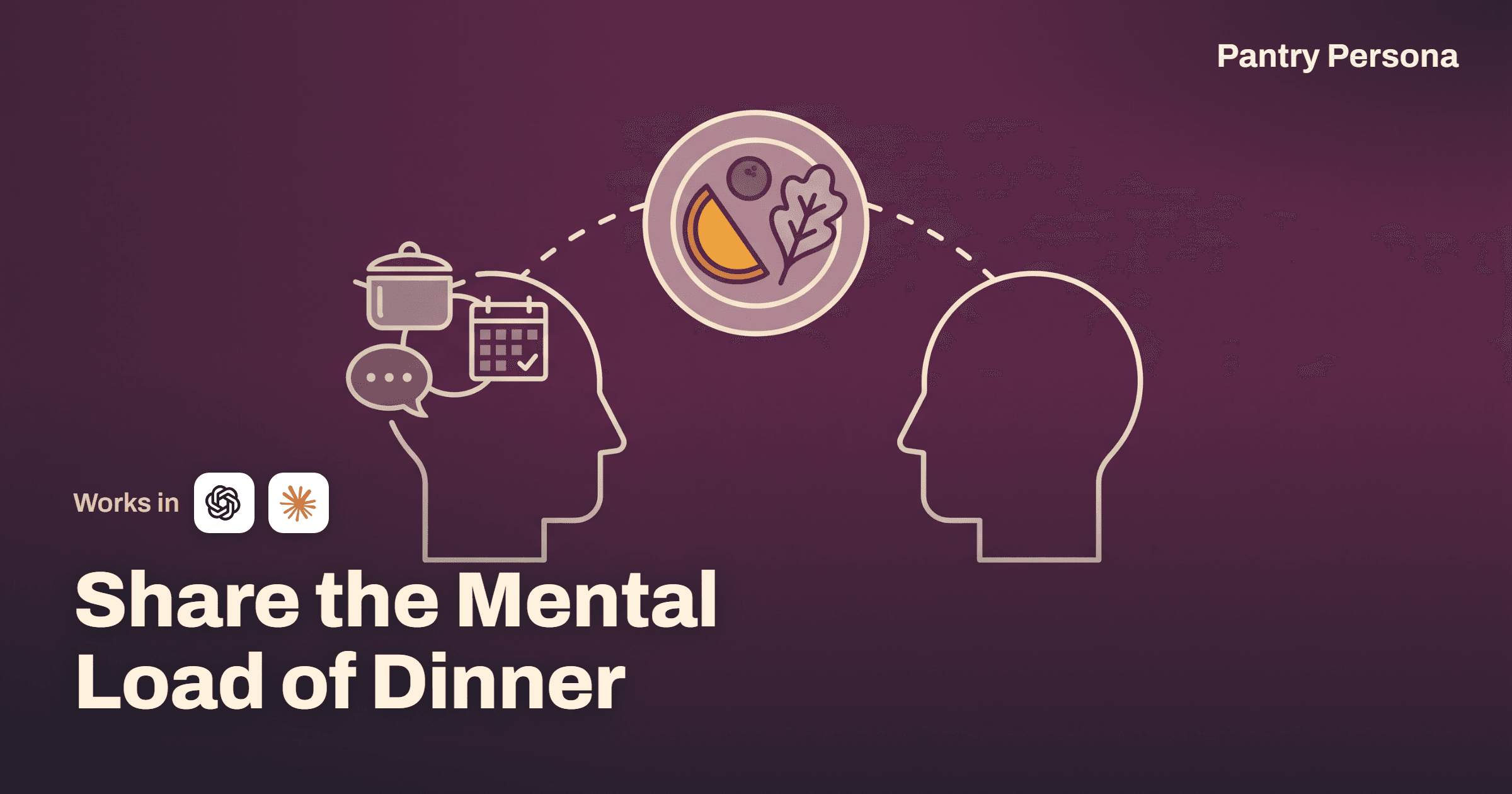
And this work doesn't even have a name. There's no title for the person who tracks what's in the fridge, knows who can't eat dairy, remembers they're out of olive oil, and factors in soccer practice on Mondays when deciding whether tonight's meal can take longer than 30 minutes.
Research from the University of Southern California found that cognitive household labor, all the planning and logistics behind running a home, falls disproportionately on women, though anyone who's ended up as the household's default meal planner, regardless of gender, knows the weight. The thinking about the cooking and shopping, on top of the cooking and shopping themselves. The carrying of everyone's preferences and constraints in your head, all day, while doing everything else.
The Mitchells are a good example. Jenna is 36, freelances as a bookkeeper, and handles most of the meal planning for her family of four. David eats everything. Olivia, 11, is lactose intolerant. Ben, 7, won't eat anything where the foods touch each other. Monday is soccer night, so dinner has to be fast. Wednesday David works late, so it's crockpot or nothing. Month-end, Jenna's slammed with client deadlines and the meal plan drops to whatever requires the fewest decisions.
Nobody trained Jenna for this. There's no onboarding. No handbook. She just started doing it, and now it's hers.
The AI gap
So Jenna tries something smart. She opens her AI assistant and types: "What should I make for dinner? I have chicken thighs, rice, and spinach."
And the AI says: try a chicken and spinach risotto with parmesan.
Olivia can't eat parmesan. The AI doesn't know that. It also doesn't know Jenna made risotto on Sunday, that Ben will refuse anything where rice is mixed into the dish, or that the spinach expires tomorrow and should probably get used tonight instead of the chicken.
The model is fine. It just has no context. Every conversation starts from scratch. Jenna would have to type her family's entire dietary situation, her pantry inventory, and this week's meal history into the chat every single time she asks for help. At that point, the AI is creating work, not saving it.
What changes when context sticks around
The missing piece is memory.
When your AI knows what's in your fridge, who you're cooking for, and what you've already made this week, the question changes. "What should I make tonight?" stops being a prompt engineering exercise and starts being an actual conversation.
Your AI sees the spinach expiring tomorrow and suggests using it tonight. It knows Olivia needs dairy-free options and skips the parmesan. It remembers you had stir-fry two days ago, so it suggests something different. And it checks what you actually have before recommending a recipe that would send you back to the store.
That's what Pantry Persona does. It gives your AI the context you've been carrying alone: what's in the fridge, who eats what, what you've already made this week. The stuff you'd have to re-explain every single time.
You still decide what to cook. But the 5pm panic, that moment of staring into the fridge with an empty brain, gets a lot smaller when you're not starting from zero every time.
This job deserves better tools
Somebody in every household ends up carrying this work. No title, no training manual. It's just a job that someone picks up and doesn't put down, usually on top of everything else.
The least we can do is give that person an AI that actually remembers their kitchen. Here's what that actually looks like in practice.