How AI Agents Are Changing the Work of Dinner
Pantry Persona
TL;DR
- We keep building food apps. What's coming is a set of agents that handle the boring logistics of feeding yourself.
- OpenAI's Agentic Commerce Protocol and grocery delivery APIs already make programmatic grocery ordering possible.
- McKinsey projects $3-5 trillion in agentic commerce by 2030. Groceries are specifically called out as high-autonomy candidates.
- Before agents can buy your food, something needs to know your kitchen. That's the missing layer.
We've been building food technology wrong for a decade.
Every few years, a new category of app appears. Recipe apps. Meal planning apps. Grocery delivery. Calorie counters. Each one solves a real problem, lives on its own island, and asks you to be the person who stitches them all together.
The assumption behind all of these products is the same: people want a better app. A prettier recipe viewer, a smarter meal planner, a faster checkout flow.
I think that assumption is about to break.
What's coming is a layer of AI agents that coordinate the boring parts of feeding yourself so you can spend your time on the parts you actually care about.
The app graveyard
Open your phone and count your food-related apps. If you cook regularly, you probably have at least three. A grocery app, a recipe app, some kind of meal planning tool (even if it's just a notes app with days of the week typed in).
Now think about how many of those apps talk to each other.
Zero. The answer is almost always zero.
Your recipe app doesn't know what's in your fridge. Your grocery app doesn't know what you planned for dinner. Your calorie tracker doesn't know what you bought at the store. We wrote about this fragmentation problem in detail in Your Kitchen Has a Memory Problem, and it's worth reading if you haven't, because it explains why the current model keeps failing home cooks.
You are the integration layer. You copy ingredients from a recipe into a shopping list. You mentally cross-reference your pantry before adding items to the cart. You try to remember whether you already have olive oil. (You do. You also did last time.)
People don't want five food apps. They want dinner on the table with less friction.
What agents actually change
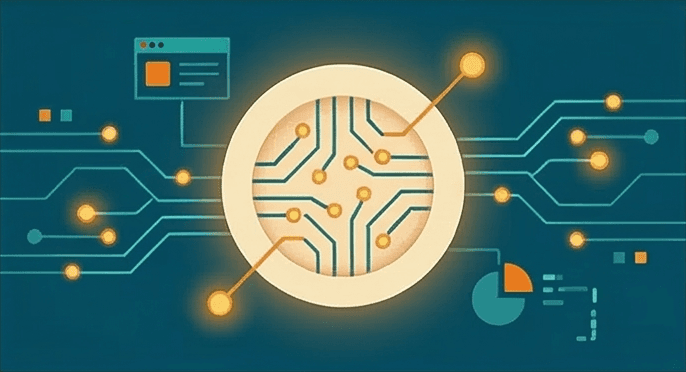
Here's where the shift happens. Instead of you doing all the coordination between tools, agents do it.
Picture a kitchen agent that knows your pantry, your family's dietary needs, and what you cooked last week. A separate grocery agent that knows pricing and availability, down to which store has the best deal on chicken thighs right now. Maybe a health agent that knows your nutritional goals and flags when you've had takeout three nights running.
These agents talk to each other. The kitchen agent tells the grocery agent what you need. The grocery agent checks availability and builds a cart. The health agent reviews the meal plan and suggests swapping a pasta night for something with more protein. The whole loop runs without you standing in the cereal aisle trying to remember if you have granola.
The infrastructure is already moving in this direction.
People don't want five food apps. They want dinner on the table. Agents are the first technology that can actually close that gap.
This isn't science fiction
OpenAI shipped the Agentic Commerce Protocol in early 2025, an open standard co-developed with Stripe. It defines how AI agents discover products and complete purchases on behalf of users. The protocol is live. Companies are building on it right now.
Major grocery delivery platforms now have public APIs that enable programmatic ordering. OpenAI's Operator tool has already demonstrated building a grocery cart from a handwritten list, no human tapping through search results required.
McKinsey projects $3-5 trillion in agentic commerce by 2030. Their analysis specifically calls out groceries as "low-regret purchases," meaning items where the cost of a wrong decision is low and the purchase is routine. Milk, eggs, rice, dish soap. These are natural candidates for high-autonomy agent behavior because nobody agonizes over which brand of paper towels to buy.
The rails exist. The commercial incentive exists. What's still missing is the context layer that tells agents what to actually do for a specific household.
The trust problem
A 2024 Bain survey found that 69% of consumers want auto-reorder when items run low. That number is striking. People clearly want this. But only 14% trust AI to place orders independently.
That 55-point gap defines the entire near-term challenge of agentic food commerce.
The bridge is progressive autonomy. You start by letting an agent suggest a grocery list. You review it, edit it, approve it. Over a few weeks, the agent learns your preferences: you always buy the same brand of yogurt, you never want the organic spinach, you go through a dozen eggs every week. The suggestions get better. You edit less.
Eventually you're comfortable letting it handle the Tuesday restock on its own. This specific agent has earned that trust through weeks of accurate suggestions. It knows your kitchen well enough that you'd be surprised if it got something wrong.
That's how trust scales: one good suggestion at a time.
What needs to exist first
Before agents can buy your groceries, coordinate your meal plan, or flag that you're low on eggs, something needs to know your kitchen.
What's in the pantry. What expired yesterday. Who in the household can't eat dairy. What you already planned for Thursday. Whether you tend to do a big shop on Saturday or small runs throughout the week.
We call this the food state layer. It's the persistent, structured representation of everything about how your household eats. Without it, agents are guessing. They might order groceries, but they'll order things you already have. They might suggest meals, but they'll ignore your kid's texture issues or your partner's allergy. We've written about why AI forgets what you ate and what changes when it actually remembers. The food state layer is what makes that kind of persistence possible.
Before agents can buy your groceries, something needs to know your kitchen. Without that context layer, agents are just guessing with a credit card.
This layer also has to be trustworthy. If an agent is going to spend your money based on what it knows about your kitchen, you need to trust the system holding that data. Your kitchen data belongs to you, and the agent era makes that principle more important. An agent with bad data or misaligned incentives buys you groceries you don't need.
In an agent-driven world, the food state layer becomes the foundation every other agent depends on. Get the kitchen state wrong, and every downstream decision compounds the error.
Where this is going
The app model for food isn't disappearing overnight. People will keep using their grocery delivery apps and recipe managers and calorie trackers. But the coordination between these tools, the part that currently lives in your head and your notes app and your Saturday morning fridge inventory, will be handled by agents within a few years.
The companies that win will be the ones that own a piece of the context layer. Whoever knows your kitchen best gets to be the agent that builds the grocery cart. Whoever knows your dietary needs influences the meal plan. Whoever tracks your pantry knows when you're running low before you do.
We're building one piece of that stack. Pantry Persona gives AI agents persistent access to your kitchen: your pantry, your household's dietary profiles, your meal history, your shopping patterns. It's the food state layer that makes agentic coordination possible, whether the agent placing your grocery order runs on OpenAI's infrastructure, Google's, or something that doesn't exist yet.
Dinner is heading toward a set of agents that know your kitchen well enough to handle the logistics. The open question is who builds the context layer that makes it all work.